


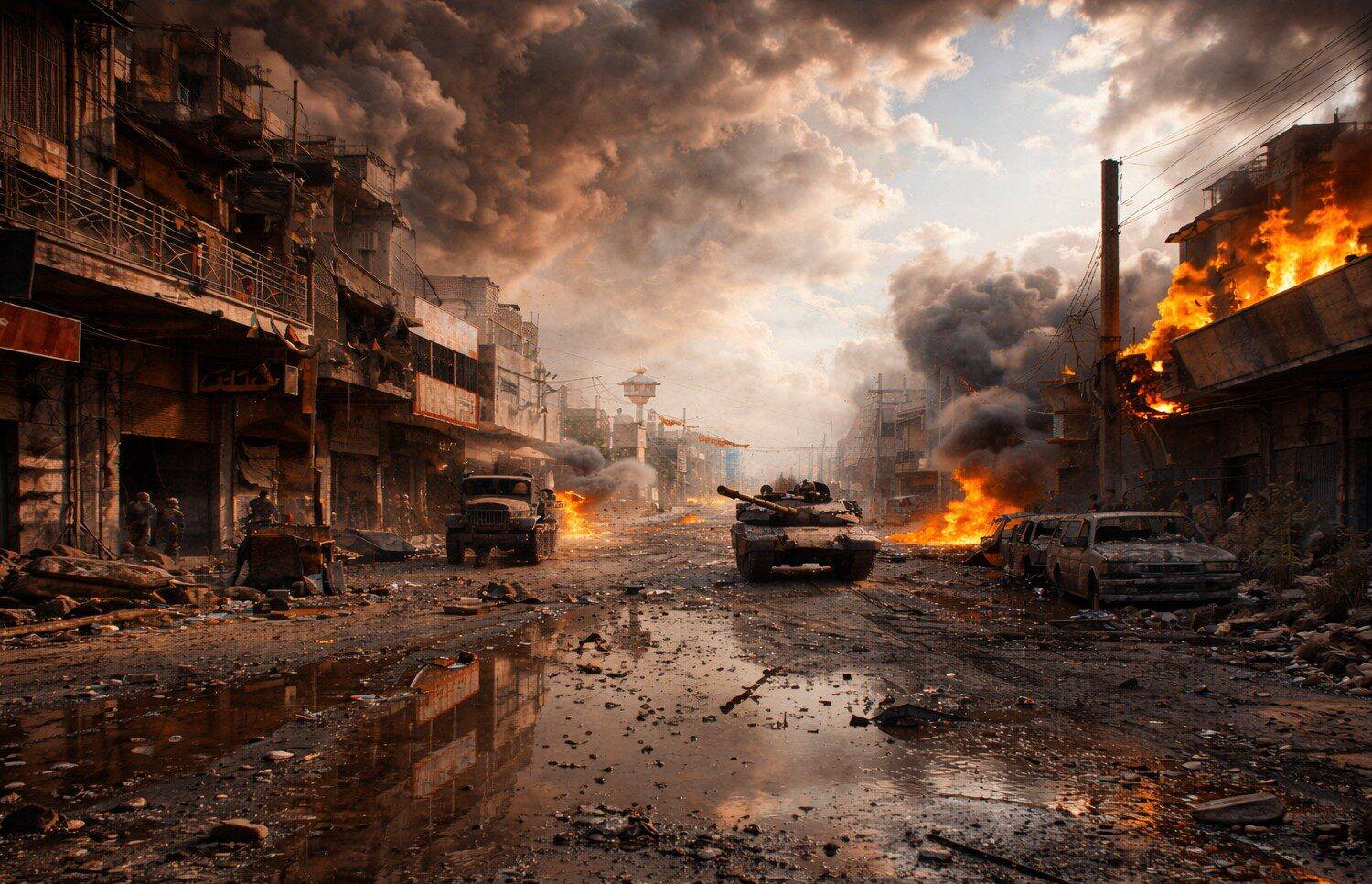
Recent geopolitical developments across the Middle East have raised serious concerns for businesses operating in the region. Many organisations are going back to their insurance arrangements and asking a very reasonable question: does standard insurance cover losses from war, terrorism, or political unrest?
In most cases, the answer is no.
Most Property All Risks (PAR) policies offer some protection for Strikes, Riots, and Civil Commotion (SRCC). But more serious events like terrorism, sabotage, and war are almost always excluded from standard policies. To be covered for those risks, businesses need a separate Political Violence (PV) insurance policy. This article explains what that means, who should be thinking about it, and what the insurance market looks like right now.
At a Glance
1. Standard Property All Risks (PAR) policies do not cover war, terrorism, or political violence.
2. Political Violence (PV) insurance is a separate, specialist policy that fills this gap.
3. PV policies can cover property damage, business interruption, sabotage, riots, civil war, and more.
4. Some extensions (including NDBI) are harder to obtain in the current market conditions.
5. Businesses with physical assets or supply chain exposure in the Middle East should review their cover.
What Is Political Violence Insurance?
Political Violence (PV) insurance is a specialist commercial policy that protects businesses against physical damage to property caused by politically motivated or conflict-related events. Where standard property policies respond to accidental damage or natural causes, a PV policy responds when the damage comes from human-driven conflict or deliberately motivated acts.
It is not a replacement for your existing property cover. It sits alongside it and closes a gap that most businesses simply do not know exists until they need to make a claim.
Events Typically Covered by a Political Violence Policy
| Event Type | What It Covers ? |
| Acts of Terrorism | Targeted attacks motivated by political, ideological, or religious intent causing physical damage to property or assets. |
| Sabotage | Deliberate destruction of infrastructure, facilities, or equipment by politically motivated actors. |
| Violent Civil Unrest | Riots, organised public disturbances, and uprisings that result in property damage beyond standard SRCC coverage. |
| Political Rebellions | Insurrections or attempts to seize power through force, including armed uprisings against the state. |
| Military Coups | Forced seizure of government power or state institutions, including associated property destruction. |
| War or Civil War | Armed conflict between state or non-state forces, covering damage sustained during active hostilities. |
If any of the above events cause damage to a company’s premises, facilities, stock, or assets, the PV policy can cover the cost of repairing or replacing the damaged property. Beyond physical damage, many policies can also be extended to include Business Interruption cover.
Business Interruption Extension
Many Political Violence policies can also include Business Interruption (BI) cover.
This extension compensates the business for income lost while operations are halted due to insured damage, giving the business an additional layer of financial support throughout the recovery period.
Which Businesses Should Be Looking at This?
If your business holds significant physical assets or runs operational infrastructure in the region, the financial consequences of a politically motivated incident can be immediate and severe. A single event can wipe out stock, put plant and machinery out of action, and bring revenue to a standstill. The recovery period that follows is often costly and drawn out.
Political Violence insurance can help cover:
- Damage to buildings, equipment, plant, and facilities from covered events
- The cost of rebuilding and restoring damaged or destroyed property
- Lost income during the period operations are interrupted after an incident
- Emergency expenses needed to get the business back up and running
- Supply chain disruptions where a supplier or contractor facility is also affected
Sectors with the most direct exposure include logistics, manufacturing, hospitality, infrastructure, energy, retail, and financial services. For any business running regional hubs, distribution networks, or client operations across the Middle East, this is not a niche concern. It is simply part of managing risk properly.
What the Market Looks Like Right Now?
When geopolitical tensions rise, the specialist insurance market feels it quickly. Underwriters assess their exposure to ongoing regional events carefully before they quote or renew Political Violence policies. Businesses considering PV coverage in 2026 are encountering the market factors below:
| Market Factor | What This Means for Your Business? |
| Premium Pricing | Pricing reflects the elevated risk environment. Businesses in higher-risk geographies or sectors may see adjusted premiums compared to prior years. |
| Coverage Restrictions | Underwriters may impose restrictions, exclusions, or sub-limits relating to specific ongoing regional situations or conflict zones. |
| NDBI Availability | Non-Damage Business Interruption (NDBI) extensions, which were previously available in the market, are now much harder to obtain given the current risk climate. |
These realities make a strong case for reviewing and placing PV coverage before anything happens, not at renewal and certainly not after a claim. The terms available from specialist underwriters can shift quickly when a region is in the news, and waiting too long can limit your options considerably.
How to Think About This Without Overreacting
Geopolitical uncertainty tends to make people want to act quickly. That is understandable. Yet, insurance decisions made in a rush are rarely the right ones. The more valuable approach is to take a step back, understand what your current policy actually covers, and figure out whether there is a gap worth addressing.
Political Violence insurance is specialist cover for serious but infrequent events. For businesses with physical assets, regional supply chains, or operational exposure in the Middle East, reviewing this cover periodically is simply good practice. It is not a panic buy and it should not be treated as one.
If your business has not looked closely at its insurance programme recently, including checking for political violence, war, and terrorism exclusions, this could be a sensible time to do so.
“In periods of uncertainty, understanding your risk exposure and the scope of your insurance protection is far more valuable than reacting to headlines.”
FAQs: Political Violence Insurance
Below are some of the questions we hear most often from businesses looking into political violence cover. The answers are written plainly so they are easy to share with colleagues or use as a starting point for internal discussions.
What is political violence insurance?
Political violence insurance is a specialist commercial policy that covers physical damage to business property caused by politically motivated events. This includes terrorism, sabotage, riots, civil war, military coups, and armed conflict. It is separate from standard property insurance and addresses a significant coverage gap that many businesses are not aware of until they need to make a claim.
Does standard property insurance cover terrorism or war in the UAE?
No. Most Property All Risks (PAR) policies in the UAE and wider Middle East exclude terrorism, war, and political violence. SRCC (Strikes, Riots and Civil Commotion) may be included as a standard extension in some policies, but more serious events require a standalone Political Violence (PV) policy to be covered.
What does a Political Violence policy cover?
A PV policy typically covers property damage from terrorism, sabotage, violent civil unrest, rebellion, military coups, and war or civil war. Many policies can also include a business interruption extension that covers lost income while operations are halted as a result of the insured damage.
Who needs political violence insurance?
Any business with significant physical assets, facilities, or operations in a region with elevated geopolitical risk should at least be looking at this. It is particularly relevant for sectors such as logistics, manufacturing, retail, hospitality, energy, and infrastructure across the Middle East.
What is Non-Damage Business Interruption (NDBI) in a PV policy?
NDBI is an extension that compensates businesses for income lost because of a political violence event, even where there is no direct physical damage to their own property. For example, if access to your premises is denied because of an incident nearby. Given current conditions, NDBI extensions are much harder to obtain in the market right now.